KEY TAKEAWAYS
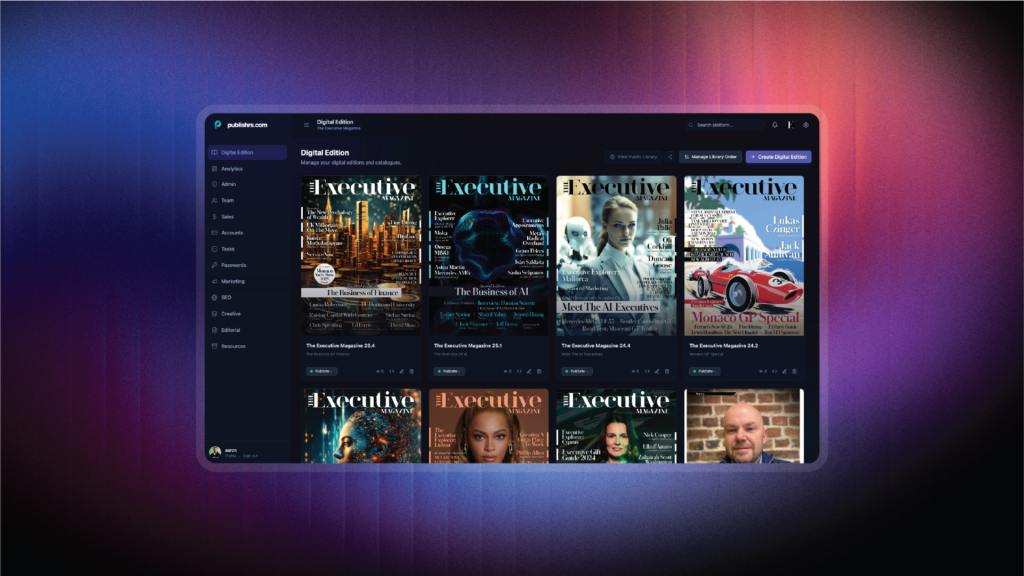
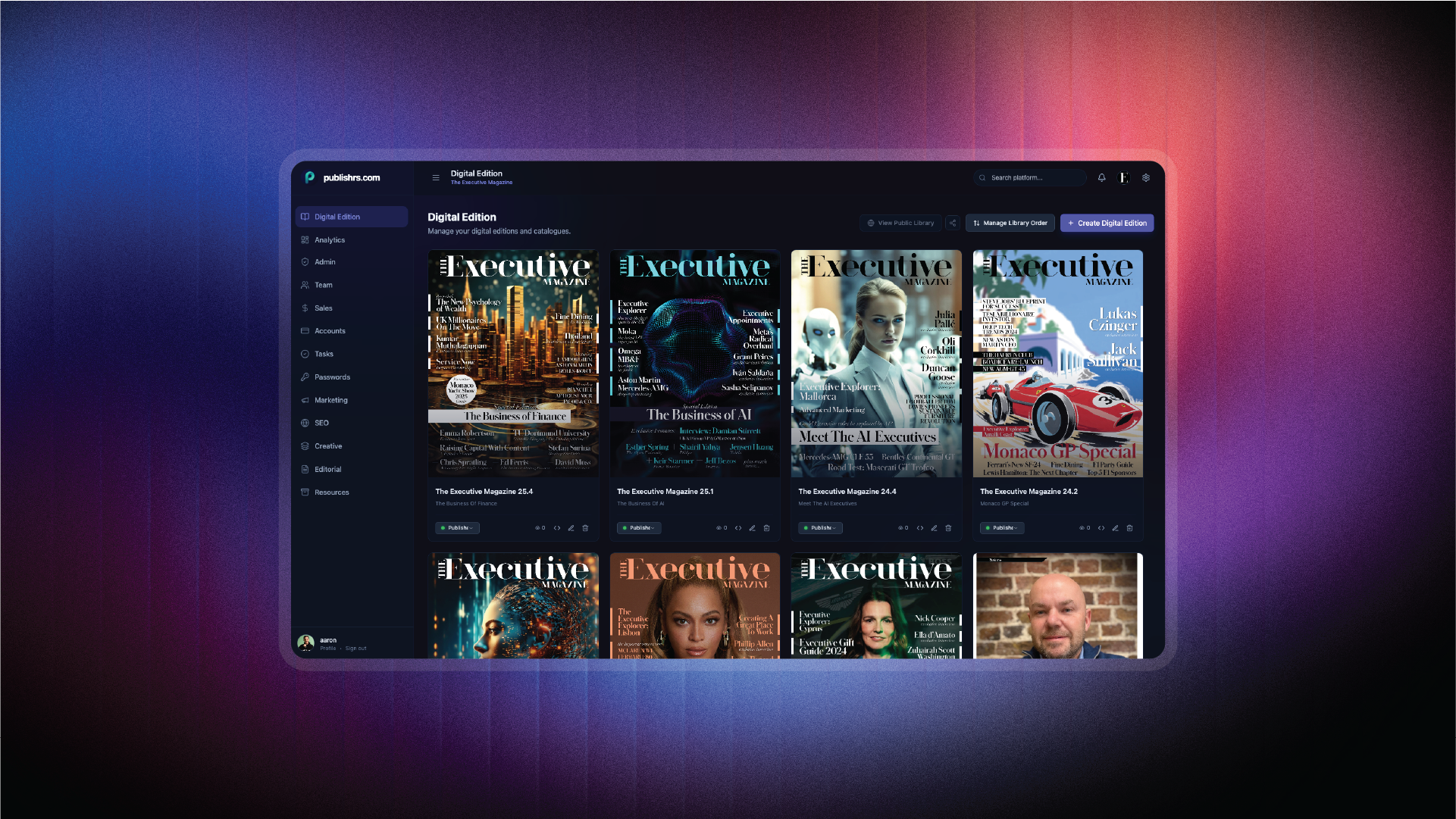
- The Executive Magazine is now on Publishrs: The Manchester-based luxury business and lifestyle title, which counts more than 480,000 subscribers, has confirmed Publishrs.com as its digital magazine platform going forward.
- The digital magazine market is accelerating: Industry data puts the global digital magazine platform market at $1.11 billion in 2026, on a trajectory to exceed $2 billion by 2032, with a compound annual growth rate above 10%.
- Mobile reading has changed the baseline: Subscribers now judge digital editions primarily on the smartphone experience. Publications that don’t meet that standard face measurable churn.
- Platform limitations have commercial consequences: Insufficient audience analytics, weak advertiser reporting, and inefficient production workflows all have a direct impact on revenue, not just operations.
- Publishrs was chosen for its combination of editorial quality and practical tools: The decision reflects a growing consensus that publishers shouldn’t have to trade one for the other.
- Migration doesn’t have to mean disruption: A well-planned platform switch can be completed without interrupting editorial cycles or subscriber delivery.
- More premium publishers are reassessing their infrastructure: The Executive Magazine’s move is part of a broader pattern of established titles investing in purpose-built publishing platforms.
INTRODUCTION
There’s a moment in most publishing businesses when the gap between the platform you’re on and the platform you need becomes too wide to ignore. For The Executive Magazine, that moment has arrived, and the response has been decisive. The Manchester-based title, which fuses luxury lifestyle content with business-critical journalism for a subscriber base now exceeding 480,000, has chosen Publishrs.com as its digital magazine platform going forward.
It’s a decision worth examining carefully, both for what it says about The Executive Magazine’s ambitions and for what it reveals about the standards publishers in 2026 should be holding their digital infrastructure to. The publication has built a strong reputation covering everything from boardroom strategy to superyacht launches, and its digital edition needs to deliver an experience that reflects that positioning.
This article looks at what’s behind the move, how Publishrs addresses the specific demands of a premium publishing operation, and what other publishers can draw from this when evaluating their own platform decisions. The answers are relevant whether you’re running a national consumer title, a specialist B2B magazine, or an independent publication building its digital audience.
The Executive Magazine: A Publication That Demands More from Its Digital Platform
Context matters when assessing a platform decision of this kind. The Executive Magazine isn’t a title that can afford a mediocre digital edition. Its readership is made up of senior executives, business owners, and high-net-worth individuals who have a sharp eye for quality and a low tolerance for anything that wastes their time. A digital edition that feels like an afterthought isn’t just a disappointment for those readers; it actively undermines the publication’s credibility.
What the Publication Represents
Launched to serve the UK’s senior business community, The Executive Magazine sits at the intersection of two demanding content categories. Business journalism requires accuracy, depth, and timeliness. Luxury lifestyle content requires visual excellence and a sense of occasion. Combining both in a single title, and doing it consistently across print and digital, is genuinely difficult.
The publication’s growth to over 480,000 subscribers is evidence that it’s got the editorial formula right. The question for the team was whether their digital infrastructure was keeping pace with both the ambition of the content and the expectations of the audience consuming it.
For a title where a single issue might include an interview with a FTSE 100 chief executive alongside a feature on a private aviation operator, the digital edition has to carry both with equal authority. That kind of versatility places real demands on a publishing platform, and it’s one reason why generic content management systems tend to fall short for publications at this level.
Why the Previous Setup Wasn’t Sufficient
The pattern is familiar across the publishing industry. A digital solution that made sense at the time of adoption gradually becomes a constraint as both the publication and its readers evolve. Page-turning PDF replicas, once considered a reasonable digital edition format, now look dated against the reading experiences offered by mobile-native platforms. Subscribers using smartphones, which now account for the majority of digital magazine consumption, expect something built for their screen rather than retrofitted to it.
Publishrs’ platform is built around that reality. It’s designed from the ground up for digital-first consumption, with the production tools and content management capabilities that a title like The Executive Magazine needs to maintain its publishing rhythm without adding unnecessary complexity.
What Publishrs Brings to a Premium Publishing Operation
Understanding why The Executive Magazine selected Publishrs requires looking at what the platform actually does, and how that maps onto the practical needs of a publication producing regular issues for a large, quality-conscious readership.
A Reading Experience That Reflects the Editorial Standard
The most visible benefit of the move is what subscribers will encounter when they open the digital edition. Publishrs delivers fully responsive layouts that adapt to any screen size without compromising the visual integrity of the original design. For a magazine with The Executive Magazine’s production values, that means cover photography renders correctly on a 6.1-inch phone screen, feature layouts don’t collapse into unreadable columns, and typography remains consistent whether a reader is on a tablet at home or a laptop in a hotel lobby.
This matters commercially as well as editorially. Research from the Reuters Institute for the Study of Journalism consistently identifies reading experience quality as one of the primary factors in whether digital subscribers renew. For a publication with hundreds of thousands of subscribers, even small improvements in renewal rates compound into significant revenue over time.
Production Tools Built for Magazine Teams
Beyond the reader-facing improvements, Publishrs changes how the production team works. Magazine publishing operates on tight, repeating cycles. Issues have to be planned, produced, signed off, and delivered to subscribers on schedule, every time, without exception. Any platform that adds friction to that process is a problem, regardless of how good the end product looks.
Publishrs’ workflow tools are built around the issue-based production model that magazine teams actually use. The platform supports collaborative editorial review, version control across the production cycle, and the ability to push updates to live digital editions without requiring a full reissue. For a team managing both editorial content and commercial placements within the same issue, that kind of granular control is practically valuable in ways that generic CMS platforms simply don’t offer.
The result is a production process that runs more smoothly, with fewer handoff points and less risk of errors making it through to the published edition. Editorial teams get back time that was previously absorbed by technical workarounds.
Audience Intelligence and the Commercial Case for Better Analytics
There’s a version of the platform migration story that focuses entirely on reader experience and production efficiency. Those gains are real and worth having on their own terms. But for a publication like The Executive Magazine, which supports a substantial commercial operation built on advertising and sponsored content, the analytics capability of the platform carries equal weight.
What Premium Advertisers Now Expect
The advertising market for premium business and lifestyle publications has shifted considerably in the past several years. Brands that once accepted circulation audits and readership surveys as sufficient proof of audience quality are now expecting more. They want to know whether readers actually engaged with their advertising, how long they spent with sponsored content, and how their placement performed relative to the surrounding editorial.
That’s a reasonable expectation, and it’s one that a PDF-based digital edition simply cannot meet. Static digital formats capture virtually no useful engagement data. Publishers relying on them are, in effect, selling advertising on trust rather than evidence, and that’s a fragile commercial position in a market where advertisers have far more data-rich alternatives competing for their budgets.
Publishrs’ analytics tools give The Executive Magazine’s commercial team the ability to report on actual reader behaviour: time spent per article, engagement by content type, return visit rates, and device breakdown. These are the figures that support meaningful conversations with advertisers and justify premium rates for both display and native commercial content.
Subscriber Data as a Strategic Asset
The same data that serves the commercial team also informs editorial decisions. Knowing which features generate the highest engagement, which formats retain readers through to the end, and which topics drive the strongest return visit rates gives an editor genuine intelligence about what their readership values most. Over time, that information shapes commissioning, informs section planning, and helps the publication concentrate its resources where they have the greatest impact.
This is a dimension of platform capability that tends to be undervalued during initial selection processes, when the focus is typically on how the digital edition will look rather than what it will tell you. For publications that are serious about growing their digital audience, the data infrastructure matters as much as the design tools.
The Wider Context: Why Platform Decisions Have Become Strategic
The Executive Magazine’s move to Publishrs sits within a broader shift in how publishing businesses think about their digital infrastructure. Platform selection used to be a procurement decision made by technical teams on the basis of cost and compatibility. It has become something closer to a strategic commitment, with meaningful implications for revenue, audience development, and competitive positioning.
The Gap Between Legacy Platforms and Modern Expectations
UK digital magazine readership grew strongly in 2025, even as print circulation showed a gradual decline Press Gazette, according to ABC data reported by Press Gazette. That trajectory places mounting pressure on the quality of the digital edition experience, because digital readers are now the growth constituency for most established titles. Serving them well isn’t optional.
Legacy platforms, particularly those built around PDF conversion rather than native digital publishing, are increasingly mismatched with that growth opportunity. They can deliver a digital edition of sorts, but they can’t deliver the experience, the data, or the commercial infrastructure that publishers need to build a sustainable digital business.
The comparison below illustrates where the gaps typically appear:
Platform Capability Comparison
| Capability | PDF-Based Legacy Platforms | Publishrs.com |
|---|---|---|
| Smartphone reading experience | Pinch-to-zoom PDF | Fully responsive, mobile-native |
| Subscriber engagement analytics | None or minimal | Granular, issue-level data |
| Editorial workflow support | Manual export/upload | Integrated, issue-based tools |
| Advertiser performance reporting | Not available | Built-in engagement metrics |
| Brand and design fidelity | Print PDF only | Digital-optimised with full control |
| Commercial content management | Manual handling | Native support with reporting |
What’s Driving Publishers to Re-evaluate
Several converging pressures are pushing established publishers to take another look at their digital platforms. Subscriber acquisition costs have risen sharply, making retention more commercially important than it has ever been. Advertising markets are demanding better proof of audience engagement. And editorial teams are under sustained pressure to produce more content with fewer resources, which means the platform they’re working on has to reduce friction rather than add to it.
As noted by What’s New in Publishing, publishers that invest in digital infrastructure capable of meeting these demands are in a meaningfully stronger position than those still operating on platforms designed for an earlier era of digital publishing. The window for deferred decisions is narrowing.
Publishers considering their own evaluation would benefit from reviewing Publishrs’ client case studies to understand the range of outcomes the platform has delivered across different publication types and sizes.
What This Means for Publishers Currently Evaluating Their Options
If you’re reading this as a publisher who has been considering a platform review but hasn’t yet committed to one, The Executive Magazine’s decision provides a useful reference point. Not because every publication’s requirements are identical, but because the underlying pressures driving the move are shared across the industry.
The Cost of Inaction
One of the less visible risks in platform decisions is the ongoing cost of staying on an inadequate system. It doesn’t announce itself as a line item on a budget. It shows up instead as marginally higher churn than it should be, advertising revenue conversations that end without commitment, editorial teams spending hours on workarounds that shouldn’t be necessary, and a digital edition that doesn’t fully represent the quality of the journalism inside it.
Taken individually, each of these costs can seem manageable. Collectively, they represent a material drag on the business, and one that compounds over time. The publications that recognise this pattern early, and act on it, tend to find that the investment in a better platform returns its value more quickly than expected.
How to Structure an Honest Platform Evaluation
A thorough evaluation doesn’t need to be a lengthy process, but it does need to be honest about what your current platform is and isn’t delivering. The questions worth asking are straightforward:
- How does your digital edition perform on a mid-range Android smartphone, which represents a significant proportion of your readership?
- What engagement data can you currently provide to an advertiser asking for proof of performance?
- How many production hours per issue are absorbed by the digital edition workflow, and how many of those are genuinely necessary?
- Can your editorial team update the live digital edition without technical support?
- What does your subscriber churn data tell you about digital edition satisfaction?
If the answers to any of those questions are uncomfortable, the follow-up question is whether the cost of addressing them through a platform migration is lower than the ongoing cost of not addressing them. For most publishers in that position, it is.
Publishrs offers a demonstration that allows publishing teams to assess the platform against their specific requirements before making any commitment.
Publishrs and The Executive Magazine: A Partnership Built on Shared Standards
The relationship between a publisher and its platform is more consequential than most technology decisions. A platform sits at the centre of everything a publication does digitally: how content is produced, how it reaches subscribers, how readers experience it, and how the commercial team supports it with advertising revenue. Getting that right matters.
Why the Fit Works
The Executive Magazine’s requirements align closely with what Publishrs is built to deliver. Both operate at the premium end of their respective markets. Both prioritise quality of output without sacrificing operational practicality. And both are focused on the long-term sustainability of the publications they serve, rather than short-term metrics that look good in a quarterly review but don’t build lasting audience value.
That alignment is reflected in the areas where the partnership delivers most immediately: the digital edition that subscribers encounter, the workflow that the editorial team operates within, and the data infrastructure that underpins the commercial operation. Each of those gains matters on its own; together they represent a meaningful step forward for the publication’s digital capabilities.
What Other Publishers Should Take Away
The clearest lesson from The Executive Magazine’s decision is that platform capability and editorial quality are no longer separable. A title that produces exceptional journalism but delivers it through an inadequate digital platform is effectively competing with one hand tied behind its back. Readers and advertisers both notice the difference, even if they don’t articulate it in those terms.
The good news is that purpose-built platforms like Publishrs have closed the gap between what publishers need and what’s available in the market. The combination of reader experience quality, editorial workflow support, and audience analytics that once required assembling multiple tools or accepting significant compromises is now available from a single, publishing-specific platform.
The Executive Magazine has acted on that reality. The question for other publishers is how long they’ll wait before doing the same.
Thinking about what a better digital platform could mean for your publication? See how Publishrs works for titles like The Executive Magazine. Book a Demo with Publishrs
Frequently Asked Questions
What has The Executive Magazine announced regarding Publishrs?
The Executive Magazine, a UK luxury business and lifestyle title with more than 480,000 subscribers, has confirmed that Publishrs.com is now its digital magazine platform of choice. The move gives the publication a purpose-built digital edition infrastructure designed to match the quality of its editorial content and serve its readership across all devices.
What makes Publishrs different from other digital magazine platforms?
Publishrs is designed specifically for magazine publishers rather than adapted from general-purpose web publishing tools. It combines mobile-first digital edition delivery with editorial workflow management, subscriber analytics, and commercial content support in a single platform. For publishers who have previously had to choose between visual quality and operational practicality, that combination is genuinely distinctive.
Why do premium publications like The Executive Magazine need a specialist digital platform?
Premium publications have higher standards than most across every dimension of the reader experience. A digital edition that looks poor on a smartphone, loads slowly, or fails to reflect the visual identity of the print product directly contradicts the positioning of the brand. Specialist platforms like Publishrs are built to preserve and extend that positioning into the digital edition, rather than treating it as a technical afterthought.
How does Publishrs support advertising revenue for magazine publishers?
The platform captures granular reader engagement data that publishers can use to support advertising sales. Rather than relying on modelled audience estimates, commercial teams using Publishrs can provide advertisers with actual engagement metrics for their placements, including time spent, interaction rates, and performance relative to editorial content. That shifts the advertiser conversation from credibility-based to evidence-based.
What does the migration process look like for a publication switching to Publishrs?
Publishrs works closely with publishers during onboarding to plan a migration that minimises disruption to editorial workflows and subscriber delivery. The process is structured around the publication’s existing production cycle, with the aim of completing the transition without creating any gap in the digital edition schedule. Support continues after launch to ensure the team is getting full value from the platform’s capabilities.
Is Publishrs a suitable platform for publications outside the luxury or business categories?
Yes. Whilst The Executive Magazine’s adoption highlights the platform’s suitability for premium titles, Publishrs serves publications across a wide range of categories and audience sizes. The core requirements of mobile-optimised delivery, efficient production workflow, and meaningful audience analytics are shared by virtually every magazine publisher considering a digital platform, regardless of subject matter or scale.
How does switching platforms affect existing subscribers?
From a subscriber’s perspective, a well-managed migration to Publishrs should result in a noticeably better reading experience, particularly on mobile. Delivery mechanisms are maintained throughout the transition, so subscribers continue to receive their digital editions without interruption. The change they experience is an improvement in quality, not a disruption to access.
What should publishers look for when evaluating a digital magazine platform?
The key criteria worth assessing are mobile reading quality, production workflow integration, subscriber analytics depth, advertiser reporting capability, and the platform provider’s understanding of magazine publishing as a business model. Publishers who evaluate platforms primarily on cost or ease of initial setup often find that those criteria don’t correlate with the commercial outcomes that matter most.
How important is audience data for digital magazine publishers in 2026?
Increasingly critical. As advertising markets demand greater proof of performance and subscription businesses depend on understanding what drives reader loyalty, audience engagement data has moved from a nice-to-have to a core operational requirement. Platforms that don’t surface meaningful engagement data leave their publishers at a significant disadvantage in both commercial and editorial decision-making.
Where can publishers find out more about Publishrs?
The best starting point is a direct demonstration of the platform. Publishrs offers a demo that allows publishing teams to see the tools in the context of their own requirements, which gives a far clearer picture than any written description of features.
Final Thoughts
The Executive Magazine’s move to Publishrs is the kind of decision that looks straightforward in retrospect but requires real clarity of thinking to arrive at. It means being honest about where the current setup is falling short, understanding what a better platform makes possible, and committing to the process of getting there.
For publishers watching from the outside, the clearest takeaway is that the gap between a good digital edition and an adequate one is not merely aesthetic. It has real implications for subscriber retention, advertiser confidence, editorial efficiency, and the long-term commercial health of the publication. Platforms that close that gap are worth taking seriously.
Publishrs has earned the confidence of a publication that holds its standards high. That’s a meaningful endorsement, and one that other publishers would do well to consider as they plan their own digital strategies for the years ahead.
Want to explore what Publishrs could mean for your publication? Join The Executive Magazine and a growing number of UK publishers who’ve chosen a platform that takes their editorial standards seriously. Talk to the Publishrs Team